

Pagid
Pagid Racing 8074 Brake Pads
from $513.54
Pagid Racing Brake Pad Shape 8074
Pagid 8074 Brake Pad Fitment Guide
Make
Model
Build (Year)
Front
Rear
Porsche
991 3.4 Carrera [iron brakes]
2012 - 16
X
Porsche
991.2 3.0 Carrera [iron brakes]
2017 - 19
X
Porsche
992 3.0 Carrera [iron brakes]
2020 +
X
Porsche
997.2 3.6 Carrera & 3.6 Carrera 4
2009 - 12
X
Porsche
718 Boxster 2.0
2017 +
X
Porsche
718 Boxster S 2.5
2017 +
X
Porsche
981 Boxster 2.7
2013 - 16
X
Porsche
981 Boxster GTS 3.4
2014 - 16
X
Porsche
981 Boxster S 3.4
2013 - 16
X
Porsche
718 Cayman 2.0
2017 +
X
Porsche
718 Cayman S 2.5
2017 +
X
Porsche
981 Cayman 2.7
2013 - 16
X
Porsche
981 Cayman GTS 3.4
2014 - 16
X
Porsche
981 Cayman S 3.4
2013 - 16
X
Pagid Racing Brake Pads are engineered for high-performance driving, delivering exceptional stopping power, durability, and control under the most demanding conditions. Trusted by professional racers and performance enthusiasts worldwide, these pads are crafted using advanced friction materials and cutting-edge technology to ensure consistent performance, low fade, and excellent modulation. Whether you're on the track or tackling aggressive street driving, Pagid Racing Brake Pads provide the reliability and confidence you need to push your vehicle to its limits.
Pagid Racing Brake compounds are for steel (cast iron) rotors only unless otherwise noted.
Pagid RSL 29 Compound
The Pagid RSL 29 (Yellow) is the world-leading endurance brake pad used by most of the winning teams in motorsport. Although designed primarily for endurance racing, many competitors use this material successfully for sprint and short distance races also. RS29 has also found favor in the growing track day market due to the level of control, good cold performance, long life and low disc wear.
Pagid RSL 1 Compound
Used in GT cars, touring cars and prototype endurance racing. Due to the high friction and good modulation, often used in sprint races as well. RSL 1 is a low metallic resin bonded material containing steel and aramid fibers with very high heat resistance. It maintains a constant friction level over a wide range of temperatures. Its reduced wear rate and disc friendliness make this material appropriate for endurance races.
Pagid RST 3 Compound
RST 3 is a medium-high friction metal-ceramic compound containing steel fibers and is therefore the perfect complement of the RST product family. It captivates by its low heat conductivity. Rally tarmac and gravel, GT cars, touring cars and prototype circuit racing, formula cars and club racing. Wide range of applications due to it‘s combination of bite, friction and controllability.

Ferodo Racing
Ferodo FCP4713 Brake Pads
from $500.00
Ferodo FCP4713 Brake Pads
Ferodo FCP4713 Rear Brake Pad Fitment
Make
Model
Build (Year)
Front
Rear
Porsche
991 3.4 Carrera [ceramic brake caliper with RBD cast iron disc ]
11 -19
X
Porsche
991 3.4 Carrera [ceramic brakes]
11 - 15
X
Porsche
991 3.8 Carrera S [ceramic brake caliper with RBD cast iron disc]
11 -19
X
Porsche
991 3.8 Carrera S [ceramic brakes]
11 - 15
X
Porsche
991 3.8 Carrera S / GTS [iron brakes]
11 - 15
X
Porsche
991.2 3.0 Carrera [ceramic brakes]
15 - 19
X
Porsche
991.2 3.0 Carrera S [ceramic brakes]
15 - 19
X
Porsche
991.2 3.0 Carrera S [iron brakes]
15 - 19
X
Porsche
991.2 3.0 Carrera GTS [iron brakes]
17 - 19
X
Porsche
992 3.0 Carrera [iron brakes]
20 -
X
Porsche
992 3.0 Carrera S [iron brakes]
20 -
X
Porsche
992 3.0 Carrera 4S [iron brakes]
20 -
X
Designed for use with iron brake rotors only. Not for use with carbon-ceramic rotors.
Ferodo Compound DS3.12
The DS3.12 is the latest evolution in Ferodo's incredible DS line. Sports cars today have more of everything: more horsepower, more sophisticated aero, higher curb weights, and stickier tires. These attributes place serious demands on a vehicle's brake system. The Ferodo DS3.12 is the modern pad compound designed from the start to explicitly handle those demands.
Ferodo Compound DS1.11
The DS1.11 has a lower mu than the DS3.12 at all temperatures and can be characterized as a moderate mu pad vs. other endurance racing compounds. They require more pedal force than the DS3.12, and they have a slightly declining torque curve as temperatures rise. As they get hotter and you dive deeper into a turn, you may feel like you need to push a little harder on the brake pedal to elicit the same response (which is a feel many drivers actually prefer). Some drivers feel that the DS1.11 is more controllable on street tires than DS3.12 since ABS cannot be activated as easily. It will last a fairly long time vs. many other pad compounds on the market but does not last quite as long as the DS3.12. They are very gentle on discs at track temperatures when a proper pad transfer layer is maintained. The DS1.11 also has an outstanding max temp and fade resistance, just not quite as high as 3.12. We're not aware of anyone who has faded them, and most people differentiate between the DS1.11 and DS3.12 based on feel.
Ferodo Compound DS2500
Although we always recommend using a dedicated race pad for the track, the DS2500 is one of the best hybrid street/track pads on the market. It features the moderately high bite and solid fade resistance of a track pad, with the relatively low dust and noise levels of a street pad. When used as a street pad, it can produce some squeal on certain vehicle platforms. If you drive aggressively on the street, do some canyon runs, autocross, and maybe some light track duty on street tires, the DS2500 is tough to beat.
Ferodo 11 FCP4713 Comparison Chart
Out of all the pad compounds we've ever tested, from all manufacturers, the Ferodo DS3.12 shows the flattest torque curve across the broadest temperature range. That means on every turn, on every track you drive, on every lap, your brake pedal is going to feel almost exactly the same, providing tremendous consistency and repeatability. The DS3.12 has a higher mu (µ) than Ferodo's other compounds, so not as much pedal pressure is required to initiate the desired response. It is also un-fadable, showing no drop in performance at any temperature your brakes will ever see.
Ferodo 11 FCP4713 Coefficient of Friction (Mu) Comparison Chart
In dyno testing, the Ferodo DS3.12 has shown superior wear rates to the other Ferodo compounds, while remaining kind to brake rotors. We believe the Ferodo DS3.12 will become the gold standard by which other race compounds will be judged.
Ferodo 11 FCP4713 Operating Temperature Comparison Chart
Porsche 991 Carrera Brake Pads, Porsche 991 Carrera S Brake Pads, Porsche 991 Carrera 4S Brake Pads, Porsche 991 GTS Brake Pads, Porsche 991.2 Carrera S Brake Pads, Porsche Panamera 970 Brake Pads, Porsche Cayenne 955 Brake Pads, Porsche Cayenne GTS Brake Pads, Porsche Cayenne Turbo S Brake Pads, Ferodo FCP4713

Cobalt Friction Technologies, Inc.
Cobalt D1417 Brake Pads
$495.00
Cobalt Brake Pads Porsche D1417 Racing Brake Pads (Rear) - 16mm
Cobalt D1417 Fits The Following Vehicles:
Make
Model
Build (Year)
Front
Rear
Porsche
991 3.4 Carrera [ceramic brake caliper with RBD cast iron disc ]
11 -19
X
Porsche
991 3.4 Carrera [ceramic brakes]
11 - 15
X
Porsche
991 3.8 Carrera S [ceramic brake caliper with RBD cast iron disc]
11 -19
X
Porsche
991 3.8 Carrera S [ceramic brakes]
11 - 15
X
Porsche
991 3.8 Carrera S / GTS [iron brakes]
11 - 15
X
Porsche
991.2 3.0 Carrera [ceramic brakes]
15 - 19
X
Porsche
991.2 3.0 Carrera S [ceramic brakes]
15 - 19
X
Porsche
991.2 3.0 Carrera S [iron brakes]
15 - 19
X
Porsche
991.2 3.0 Carrera GTS [iron brakes]
17 - 19
X
Porsche
992 3.0 Carrera [iron brakes]
20 -
X
Porsche
992 3.0 Carrera S [iron brakes]
20 -
X
Porsche
992 3.0 Carrera 4S [iron brakes]
20 -
X
Cobalt Friction Technologies, Inc. is a leading developer & manufacturer of friction compounds for high-performance and professional motorsport disc brake applications. With our industry-leading range of race-proven XR-Series Carbon-Ceramic materials, Cobalt has a solution to meet your most demanding performance requirements, while always exceeding your expectations with superior technical and race engineering support.
PASSION The heart and soul of Cobalt Friction Technologies is fueled by our never-ending passion for motorsports. Our teams and drivers continually place greater demands on their equipment, and Cobalt Friction is there to satisfy these demands every step along the way.
PERFORMANCE Cobalt Friction's customer-driven research & development is what sets us apart from the competition. Our engineers do not design compounds based on lab results alone or to solely meet overly simplified, uni-dimensional "performance criteria". Rather, we continually "step outside the box" by working with and collecting feedback from our drivers and teams at all levels of professional and amateur motorsports, right there at the race track...week in and week out. When being the best and finishing first is the only option, Cobalt Friction accepts zero compromises, and so do our customers and teams.
TECHNICAL EXCELLENCE Cobalt-equipped drivers and teams are backed by race engineering support that is second to none. From the garages at the Rolex 24 at Daytona to the paddock at the SCCA Nationals, Cobalt Friction Technologies delivers the products, knowledge and power to win.

Performance Friction Corporation
Performance Friction PFC 1389 Brake Pads
$491.67
PFC Brake Pads 1389.08.17.44
PFC 08 COMPOUND
One of PFC's most popular compounds which came to fame in Endurance Sports Car and GT racing due to its performance in applications where smooth initial bite is a must. PFC 08 has a slight friction rise with temperature, excellent release and modulation characteristics.
Despite its considerable performance, PFC 08 has the lowest wear rate of all PFC compounds and can easily match the wear characteristics of competitors' endurance materials, but with much higher bite and consistent performance across a broad temperature range.
PFC 1389.08.17.44 Brake Pad Fitment:
Make
Model
Build (Year)
Front
Rear
Porsche
991 3.4 Carrera [iron brakes]
12 - 16
X
Porsche
991.2 3.0 Carrera [iron brakes]
17 - 19
X
Porsche
992 3.0 Carrera [iron brakes]
20 -
X
Porsche
997 3.6 C & 3.6 C4
08 - 11
X
Porsche
718 Boxster 2.0 [982]
16 -
X
Porsche
718 Boxster S 2.5 [982]
16 -
X
Porsche
Boxster 2.7 [981]
12 -
X
Porsche
Boxster GTS 3.4 [981]
14 -
X
Porsche
Boxster S 3.4 [981]
12 -
X
Porsche
718 Cayman 2.0 [982]
16 -
X
Porsche
718 Cayman S 2.5 [982]
16 -
X
Porsche
Cayman 2.7 [981]
13 -
X
Porsche
Cayman GTS 3.4 [981]
14 -
X
Porsche
Cayman S 3.4 [981]
13 -
X
GiroDisc Racing Brakes & Technologies
Girodisc 1417 Brake Pads
from $490.00
GiroDisc 1417 Rear Racing Brake Pads
GP30-1417.16 Brake Pads
Designed to deliver race-level performance on the street, these pads blend aggressive stopping power with rotor preservation, making them an ideal choice for motorsport enthusiasts who demand reliability and precision.
The GiroDisc GP30 Endurance Race Pads feature a premium compound optimized for the unique demands of automotive racing and spirited street driving. Their advanced formulation guarantees a firm, predictable bite that enhances braking confidence during high-speed track sessions or aggressive daily driving. These pads are designed to maintain their grip under intense conditions without excessive fade or rotor wear.
GP35-1417.16 Brake Pads
Our GP35 compound combines the best of both worlds into one all-around race pad. We took some of the longevity of our endurance pads, some of the bite of our sprint pads, and worked to develop a compound that can do it all. As a bonus, it’s easy to bed, which means less time figuring your brakes out, and more time driving on the track.
The GP35 is designed to work with street car ABS as well as motorsport-grade ABS found in factory-built race cars. The torque curve is designed to be smooth and linear, which leads to superior modulation and release under trail braking. These pads work with a wide range of tires, from DOT street tires to R-compounds to full race slicks.
It has become our most popular compound and is the compound we recommend most frequently to track day drivers and shops running cars in professional racing series.
GP40-1417.16 Brake Pads
GP40 compound falls between a sprint and an endurance compound. It maintains good bite and pedal feel while being friendly to your rotors. They are a favorite among our track day customers and shares a lineage with compounds found on cars competing in legendary races like the 24 Hours of Le Mans. These pads have been race-tested and hold up to the brutal conditions on the track.
GiroDisc 1417 FITMENT GUIDE:
Make
Model
Build (Year)
Front
Rear
Porsche
991 3.4 Carrera [ceramic brake caliper with RBD cast iron disc ]
11 -19
X
Porsche
991 3.4 Carrera [ceramic brakes]
11 - 15
X
Porsche
991 3.8 Carrera S [ceramic brake caliper with RBD cast iron disc]
11 -19
X
Porsche
991 3.8 Carrera S [ceramic brakes]
11 - 15
X
Porsche
991 3.8 Carrera S / GTS [iron brakes]
11 - 15
X
Porsche
991.2 3.0 Carrera [ceramic brakes]
15 - 19
X
Porsche
991.2 3.0 Carrera S [ceramic brakes]
15 - 19
X
Porsche
991.2 3.0 Carrera S [iron brakes]
15 - 19
X
Porsche
991.2 3.0 Carrera GTS [iron brakes]
17 - 19
X
Porsche
992 3.0 Carrera [iron brakes]
20 -
X
Porsche
992 3.0 Carrera S [iron brakes]
20 -
X
Porsche
992 3.0 Carrera 4S [iron brakes]
20 -
X

GiroDisc Racing Brakes & Technologies
Girodisc Brake Pads 1389 (Front)
$490.00
GiroDisc 1389 Front Racing Brake Pads
A race pad for all occasions.
Our GP35 compound combines the best of both worlds into one all-around race pad. We took some of the longevity of our endurance pads, some of the bite of our sprint pads, and worked to develop a compound that can do it all. As a bonus, it’s easy to bed, which means less time figuring your brakes out, and more time driving on the track.
The GP35 is designed to work with street car ABS as well as motorsport-grade ABS found in factory-built race cars. The torque curve is designed to be smooth and linear, which leads to superior modulation and release under trail braking. These pads work with a wide range of tires, from DOT street tires to R-compounds to full race slicks.
It has become our most popular compound and is the compound we recommend most frequently to track day drivers and shops running cars in professional racing series.
Note: this compound is only compatible with iron rotors.
GiroDisc 1389 FITMENT GUIDE:
Make
Model
Build (Year)
Front
Rear
Porsche
991 3.4 Carrera [iron brakes]
12 - 16
X
Porsche
991.2 3.0 Carrera [iron brakes]
17 - 19
X
Porsche
992 3.0 Carrera [iron brakes]
20 -
X
Porsche
997 3.6 C & 3.6 C4
08 - 11
X
Porsche
718 Boxster 2.0 [982]
16 - 25
X
Porsche
718 Boxster S 2.5 [982]
16 - 25
X
Porsche
Boxster 2.7 [981]
12 - 16
X
Porsche
Boxster GTS 3.4 [981]
14 - 16
X
Porsche
Boxster S 3.4 [981]
12 - 16
X
Porsche
718 Cayman 2.0 [982]
17 - 25
X
Porsche
718 Cayman S 2.5 [982]
17 - 25
X
Porsche
Cayman 2.7 [981]
13 - 16
X
Porsche
Cayman GTS 3.4 [981]
14 - 16
X
Porsche
Cayman S 3.4 [981]
13 - 16
X

GiroDisc Racing Brakes & Technologies
Girodisc 1740 Brake Pads
from $440.00
Girodisc 1740 Brake Pads
The Girodisc 1740 provides improved bite, smooth modulation, and consistent braking for Porsche drivers who want enhanced performance without excessive dust or noise. Ideal for spirited road use, these pads offer excellent cold bite and stable friction while remaining quiet and easy to control. They are a direct-fit option for Girodisc 2-piece rear rotor systems.
Fits the Following Vehicles:
Make
Model
Build (Year)
Front
Rear
Porsche
918 Spyder
13 - 15
X
Porsche
991 GT3 [ceramic brakes]
15 - 18
X
Porsche
991 GT3 [iron brakes]
15 - 18
X
Porsche
991 GT3 RS [ceramic brakes]
15 - 18
X
Porsche
991 GT3 RS [iron brakes]
15 - 18
X
Porsche
991 Turbo [ceramic brakes]
13 -
X
Porsche
991 Turbo [iron brakes]
13 -
X
Porsche
991 Turbo S [ceramic brakes]
13 -
X
Porsche
991 Turbo S [iron brakes]
13 -
X
Porsche
991.2 GT2 RS [ceramic brakes]
18 -
X
Porsche
991.2 GT3 [ceramic brakes]
18 -
X
Porsche
991.2 GT3 [iron brakes]
18 -
X
Porsche
991.2 GT3 RS [ceramic brakes]
18 -
X
Porsche
991.2 GT3 RS [iron brakes]
18 -
X
Porsche
991 R [ceramic brakes]
16 -
X
Porsche
991 911 Speedster [iron brakes]
19 -
X
Porsche
992 3.0 Carrera 4S [ceramic brakes]
18-
X
Porsche
718 Cayman GT4 4.0 [982] [cast iron brakes]
19 -
X
Porsche
718 Cayman GT4 4.0 [982] [ceramic brakes]
19 -
X
Porsche
Cayman GT4 [981]
16 -
X
Porsche
Cayman GT4 [981] [ceramic brakes]
16 -
X
Porsche
992 Turbo [iron brakes]
2020 -
X
Porsche
992 GT3 [iron brakes]
2021 -
X
Porsche
992 Carrera S [ceramic brakes]
2018 -
X
Porsche
992 GT3 [ceramic brakes]
2021 -
X
Porsche
992 Turbo [ceramic brakes]
20 -
X
Porsche
718 Cayman GT4 4.0 RS [982] [cast iron brakes]
21 -
X
Porsche
718 Cayman GT4 4.0 RS [982] [ceramic brakes]
21 -
X
Note: Designed specifically for Girodisc rear two-piece steel rotors, not PCCB systems.
GiroDisc GP10 Compound refined for the street but built to perform
Designed for performance-minded drivers, the GP10 semi-metallic brake pads strike the perfect balance between daily drivability and occasional track use. Optimized for street conditions, they offer a quiet, lower-dust experience without sacrificing the confident stopping power you need when the pace picks up.
Whether you're navigating traffic or hitting the occasional track day, these pads deliver a responsive pedal feel, excellent heat resistance, and consistent braking performance. Built for longevity and reliability, they’re the ideal upgrade for enthusiasts who want everyday comfort with the capability to push harder when it counts.
For drivers planning extensive track sessions or more aggressive track driving, we recommend considering our dedicated race pads, engineered to handle the extreme heat and demands of frequent high-performance track use.
GiroDisc GP30 Compound - endurance race pad
Our GP30 compound is an all-around endurance race pad. The GP30 is designed to work with street car ABS as well as motorsport-grade ABS found in factory-built race cars. These pads work with a wide range of tires, from DOT street tires to R-compounds to full race slicks.
GiroDisc GP35 Compound - A race pad for all occasions
Our GP35 compound combines the best of both worlds into one all-around race pad. We took some of the longevity of our endurance pads, some of the bite of our sprint pads, and worked to develop a compound that can do it all. As a bonus, it’s easy to bed, which means less time figuring your brakes out, and more time driving on the track.
The GP35 is designed to work with street car ABS as well as motorsport-grade ABS found in factory-built race cars. The torque curve is designed to be smooth and linear, which leads to superior modulation and release under trail braking. These pads work with a wide range of tires, from DOT street tires to R-compounds to full race slicks.
It has become our most popular compound and is the compound we recommend most frequently to track day drivers and shops running cars in professional racing series.
Note: this compound is only compatible with iron rotors.
GiroDisc 1740 Features
• High-performance street-focused compound• Low dust and reduced noise levels• Strong cold bite for daily street use• Smooth, predictable pedal modulation• Stable friction across a broad temperature range• Direct-fit for Girodisc rear brake systems• Sold/priced per rear axle set
GiroDisc 1740 Specifications
• Compound: GP10 Street Performance• Position: Rear• Compatibility: Girodisc steel rotors• Operating Range: Optimized for street temperatures• Includes: One complete set of rear brake pads
Girodisc 1740.18 Rear Pad FAQs
Are these pads quiet enough for daily use? Yes. The GP10 compound is engineered to minimize noise and vibration while delivering excellent braking feel.
Can these pads be used with OEM Porsche rotors? While they may physically fit, they are optimized for performance and wear when paired with Girodisc two-piece rotors.
Are these suitable for track days? They can handle light HPDE use, but for full track sessions a more aggressive compound like Girodisc GP30 or the best selling GP35 are recommended.
Do these pads create less dust than OEM pads? Yes. GP10 pads produce noticeably less dust, helping keep your wheels cleaner.
How do these compare to factory Porsche performance pads? GP10 pads offer smoother modulation, better cold bite, and significantly reduced dust, making them ideal for spirited street driving.
Enhance your Porsche's rear braking confidence with Girodisc GP10 Street Pads GP10-1740.18 — engineered for clean, quiet, and consistent performance.
Performance Friction Corporation
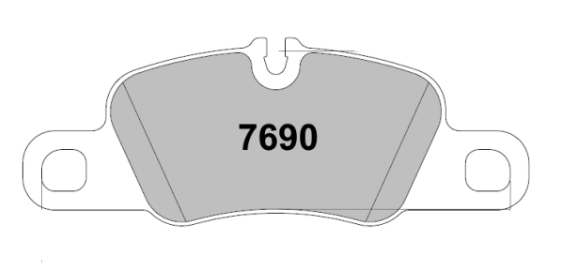
Performance Friction PFC 7690 Brake Pads
$419.07
PFC Brake Pads 7690.332.16.44
PFC Brakes offers a wide range of sports car applications. Each PFC product is meticulously created to the highest performance and technology expectations. The folks at PFC take pride in the accomplishments of the drivers and race teams that run PFC products. With More Championships than Any Other™, PFC are among the best racing brakes on the market. Known around the globe in the sports car market, PFC is involved with numerous sports car events including:
IMSA Continental Tire Sports Car Challenge
Porsche Cup Racing
Pirelli World Challenge
PFC 7690 Fitments:
Make
Model
Build (Year)
Front
Rear
Porsche
991 3.4 Carrera [ceramic brake caliper with RBD cast iron disc ]
11 -19
X
Porsche
991 3.4 Carrera [ceramic brakes]
11 - 15
X
Porsche
991 3.8 Carrera S [ceramic brake caliper with RBD cast iron disc]
11 -19
X
Porsche
991 3.8 Carrera S [ceramic brakes]
11 - 15
X
Porsche
991 3.8 Carrera S / GTS [iron brakes]
11 - 15
X
Porsche
991.2 3.0 Carrera [ceramic brakes]
15 - 19
X
Porsche
991.2 3.0 Carrera S [ceramic brakes]
15 - 19
X
Porsche
991.2 3.0 Carrera S [iron brakes]
15 - 19
X
Porsche
991.2 3.0 Carrera GTS [iron brakes]
17 - 19
X
Porsche
992 3.0 Carrera [iron brakes]
20 -
X
Porsche
992 3.0 Carrera S [iron brakes]
20 -
X
Porsche
992 3.0 Carrera 4S [iron brakes]
20 -
X
With over 35 years of friction knowledge and on-track experience, PFC's process enables them to provide you with the proper friction every time.
No Compromises
All PFC pad compounds have been thoroughly processed and are “race ready”. That means very easy burnishing to bed pads and rotors.
PFC 332 Compound
PFC 332 has been formulated with lower bite and torque for rear brake applications. With a smooth release, the PFC 332 compound offers excellent stability and control. PFC 332 has been designed to work with ABS applications and has exceptionally low wear rates.
Ferodo Racing
Ferodo FCP4805 Brake Pads
from $417.00
Ferodo FCP4805 Porsche Front Brake Pads
Ferodo FCP4805 Brake Pad Fitment Guide (FMSI D1389)
Make
Model
Build (Year)
Front
Rear
Porsche
991 3.4 Carrera [iron brakes]
12 - 16
X
Porsche
991.2 3.0 Carrera [iron brakes]
17 - 19
X
Porsche
992 3.0 Carrera [iron brakes]
20 -
X
Porsche
997 3.6 C & 3.6 C4
08 - 11
X
Porsche
718 Boxster 2.0 [982]
16 -
X
Porsche
718 Boxster S 2.5 [982]
16 -
X
Porsche
Boxster 2.7 [981]
12 -
X
Porsche
Boxster GTS 3.4 [981]
14 -
X
Porsche
Boxster S 3.4 [981]
12 -
X
Porsche
718 Cayman 2.0 [982]
16 -
X
Porsche
718 Cayman S 2.5 [982]
16 -
X
Porsche
Cayman 2.7 [981]
13 -
X
Porsche
Cayman GTS 3.4 [981]
14 -
X
Porsche
Cayman S 3.4 [981]
13 -
X
Designed for use with iron brake rotors only. Not for use with carbon-ceramic rotors.
Ferodo Compound DS3.12
The DS3.12 is the latest evolution in Ferodo's incredible DS line. Sports cars today have more of everything: more horsepower, more sophisticated aero, higher curb weights, and stickier tires. These attributes place serious demands on a vehicle's brake system. The Ferodo DS3.12 is the modern pad compound designed from the start to explicitly handle those demands.
Ferodo Compound DS1.11
The DS1.11 has a lower mu than the DS3.12 at all temperatures and can be characterized as a moderate mu pad vs. other endurance racing compounds. They require more pedal force than the DS3.12, and they have a slightly declining torque curve as temperatures rise. As they get hotter and you dive deeper into a turn, you may feel like you need to push a little harder on the brake pedal to elicit the same response (which is a feel many drivers actually prefer). Some drivers feel that the DS1.11 is more controllable on street tires than DS3.12 since ABS cannot be activated as easily. It will last a fairly long time vs. many other pad compounds on the market but does not last quite as long as the DS3.12. They are very gentle on discs at track temperatures when a proper pad transfer layer is maintained. The DS1.11 also has an outstanding max temp and fade resistance, just not quite as high as 3.12. We're not aware of anyone who has faded them, and most people differentiate between the DS1.11 and DS3.12 based on feel.
Ferodo Compound DS2500
Although we always recommend using a dedicated race pad for the track, the DS2500 is one of the best hybrid street/track pads on the market. It features the moderately high bite and solid fade resistance of a track pad, with the relatively low dust and noise levels of a street pad. When used as a street pad, it can produce some squeal on certain vehicle platforms. If you drive aggressively on the street, do some canyon runs, autocross, and maybe some light track duty on street tires, the DS2500 is tough to beat.
Ferodo FCP4805 Comparison Chart
Out of all the pad compounds we've ever tested, from all manufacturers, the Ferodo DS3.12 shows the flattest torque curve across the broadest temperature range. That means on every turn, on every track you drive, on every lap, your brake pedal is going to feel almost exactly the same, providing tremendous consistency and repeatability. The DS3.12 has a higher mu (µ) than Ferodo's other compounds, so not as much pedal pressure is required to initiate the desired response. It is also un-fadable, showing no drop in performance at any temperature your brakes will ever see.
Ferodo 11 FCP4805 Coefficient of Friction (Mu) Comparison Chart
In dyno testing, the Ferodo DS3.12 has shown superior wear rates to the other Ferodo compounds, while remaining kind to brake rotors. We believe the Ferodo DS3.12 will become the gold standard by which other race compounds will be judged.
Ferodo 11 FCP4805 Operating Temperature Comparison Chart

Carbotech Performance Brakes
Carbotech CT1741 Brake Pads
from $374.00
Carbotech CT1741 Brake Pads
Carbotech CT1741 Brake Pad Fitment Guide
Make
Model
Build (Year)
Front
Rear
Porsche
991 GT3 [iron brakes]
15 - 18
X
Porsche
991 GT3 RS [iron brakes]
15 - 18
X
Porsche
991 Turbo [iron brakes]
13 -
X
Porsche
991 Turbo S [iron brakes]
13 -
X
Porsche
991.2 GT3 [iron brakes]
18 -
X
Porsche
991.2 GT3 RS [iron brakes]
18 -
X
Porsche
991 911 Speedster [iron brakes]
19 -
X
Porsche
992 3.0 Carrera S [iron brakes]
18-
X
Porsche
992 3.0 Carrera 4S [iron brakes]
18-
X
Porsche
718 Cayman GT4 4.0 [982] [cast iron brakes]
19 -
X
Porsche
Cayman GT4 [981]
16 -
X
Porsche
718 Cayman GTS 4.0 [982] [cast iron brakes]
2016
X
Porsche
992 Turbo [iron brakes]
2020 -
X
Porsche
992 GT3 [iron brakes]
2021 -
X
Porsche
718 Cayman GT4 4.0 RS [982] [cast iron brakes]
21 -
X
Available Carbotech Compounds
1521 — High-performance street compound with low dust, low noise, and excellent release and modulation.
AX6 — Autocross-focused compound with strong low-temperature bite and progressive control.
XP8 — Entry racing and track-day compound with strong fade resistance and rotor-friendly behavior.
XP10 — Higher-torque race compound with strong initial bite and excellent fade resistance.
XP12 — More aggressive race compound with added bite and high-temperature capability.
RP2 — Endurance racing compound designed for sustained performance and strong fade resistance.
XP20 — Very aggressive racing compound with high torque and extreme heat capability.
XP24 — Top-tier Carbotech race compound engineered for maximum torque and endurance-level demands.
How to Choose the Right Compound
1521 is the street-focused option. AX6 is intended for autocross. XP8, XP10, XP12, XP20, and XP24 are race-oriented compounds with increasing heat and torque capability. RP2 is designed for endurance racing. Track and racing compounds are not intended for normal street use.
Carbotech CT1741 Brake Pads FAQs
How do I know if CT1741 fits my vehicle?Review the Vehicle Fitment section above and compare the make, model, year range, and notes such as caliper, rotor, or trim details to your vehicle.
Which Carbotech compound is best for street driving?The 1521 compound is Carbotech's street-focused option. The other compounds in this listing are intended for autocross, track, or race applications.
Do I need to bed in Carbotech brake pads?Yes. Proper bedding is important for pad transfer, performance, and wear. Follow Carbotech's recommended bedding procedure for the chosen compound.
Choose the Carbotech CT1741 compound that matches your vehicle and driving demands, then confirm fitment carefully before checkout.

Race Technologies, LLC
Race Technologies 2425 Brake Pad
from $349.00
Race Technologies Rear Brake Pad 2425
Fitment Guide For Race Technologies 2425 Brake Pad
Make
Model
Build (Year)
Front
Rear
Porsche
991 3.4 Carrera [ceramic brake caliper with RBD cast iron disk ]
11 -
X
Porsche
991 3.4 Carrera [ceramic brakes]
11 - 15
X
Porsche
991 3.8 Carrera S [ceramic brake caliper with RBD cast iron disk]
11 -
X
Porsche
991 3.8 Carrera S [ceramic brakes]
11 - 15
X
Porsche
991 3.8 Carrera S / GTS [iron brakes]
11 - 15
X
Porsche
991.2 3.0 Carrera [ceramic brakes]
15 -
X
Porsche
991.2 3.0 Carrera S [ceramic brakes]
15 -
X
Porsche
991.2 3.0 Carrera S [iron brakes]
15 -
X
Porsche
991.2 3.0 Carrera GTS [iron brakes]
17 -
X
Porsche
992 3.0 Carrera [iron brakes]
18-
X
Porsche
992 3.0 Carrera S [iron brakes]
18-
X
Porsche
992 3.0 Carrera 4S [iron brakes]
18-
X
Porsche
Panamera [cast iron & ceramic brakes]
09 - 16
X
Race Technologies 2425 Rear Brake Pads
The Race Technologies 2425 rear brake pad is a high-performance pad shape designed for Porsche braking systems used in demanding street, HPDE, track day, club racing, and motorsport applications. Available in Race Technologies RE10 and TS20 compounds, the 2425 gives Porsche drivers the ability to select a friction material matched to their vehicle, driving environment, and braking demands.
The 2425 is used as a rear brake pad on select Porsche 991, 991.2, and 992 Carrera applications, including vehicles equipped with specific iron and ceramic brake configurations. Because Porsche brake systems can vary by model, year, and brake option, always confirm the 2425 pad shape and your vehicle's brake configuration before ordering.
Race Technologies 2425 Brake Pad Specifications
Pad Shape: 2425
Axle Position: Rear
Available Compounds: RE10 and TS20
Applications: Select Porsche 991, 991.2, and 992 models
Use: Street, HPDE, track day, club racing, and motorsport depending on compound
Race Technologies 2425 Brake Pad Compound Comparison
RE10 Racing Compound
Race Technologies RE10 is an endurance-focused racing compound engineered for demanding track use. It combines strong stopping performance with low thermal conductivity and low pad and rotor wear, making it an excellent choice when consistency and durability over extended sessions are priorities.
RE10 is particularly well suited to professional endurance racing, club racing, and demanding HPDE applications. It is a racing-use compound and is not intended as a street-oriented brake pad. Racing compounds may generate increased noise and dust when used outside their intended operating temperature range.
TS20 Street and Track Compound
Race Technologies TS20 is a dual-purpose performance compound designed for drivers who use their Porsche on the street as well as for HPDE and lighter track duty. TS20 provides an aggressive initial response with good resistance to heat while maintaining more street-friendly noise and dust characteristics than a dedicated racing compound.
TS20 is an excellent option for drivers looking for increased braking capability without moving to a dedicated race-only friction material.
Race Technologies 2425 Porsche Applications
The Race Technologies 2425 pad shape fits the rear braking systems of select Porsche 911 Carrera models, including applications within the 991, 991.2, and 992 generations. Depending on model and year, applications include Carrera, Carrera S, Carrera 4S, and GTS models with specific iron or ceramic brake configurations.
Porsche offered several brake configurations within these model ranges, so vehicle model alone should not be used to determine brake pad fitment. Compare the 2425 pad shape with your existing brake pad and verify your brake system before ordering.
Choosing Between RE10 and TS20
Choose RE10 when the vehicle is primarily used for demanding track, club racing, or endurance applications where consistent braking performance and durability under sustained heat are priorities. Choose TS20 for performance street driving, HPDE, and lighter track use where strong braking performance needs to be balanced with more street-friendly characteristics.
Brake pad performance can vary based on vehicle weight, tire grip, brake temperatures, track configuration, driving style, and brake system setup. Selecting the correct compound for the intended operating environment is important for both braking performance and component life.
Shop Race Technologies 2425 Rear Brake Pads
Competition Motorsport specializes in high-performance and racing brake components for Porsche street, track, and race cars. Select the Race Technologies RE10 or TS20 compound above, or contact our motorsports specialists for assistance confirming the 2425 pad shape, Porsche fitment, and the best compound for your driving application.
Note: RE10 is a "racing use only" pad.
Running a "racing use only" pad on the street could produce excessive noise and dust. Disc wear could be accelerated if driven at cold temperatures or used in the incorrect temperature range.
Racing pads are designed to work in specific temperature ranges, so it's important to choose the right compound for the environment the vehicle will be used in.
Pad compounds are run on a brake dynamometer over multiple brake applications ("stops") to test the materials in a controlled environment and obtain accurate data. Wear rates and operating temperatures can be influenced by car set-up, grip levels, track layout, and other variables.
Spiegler Performance Parts
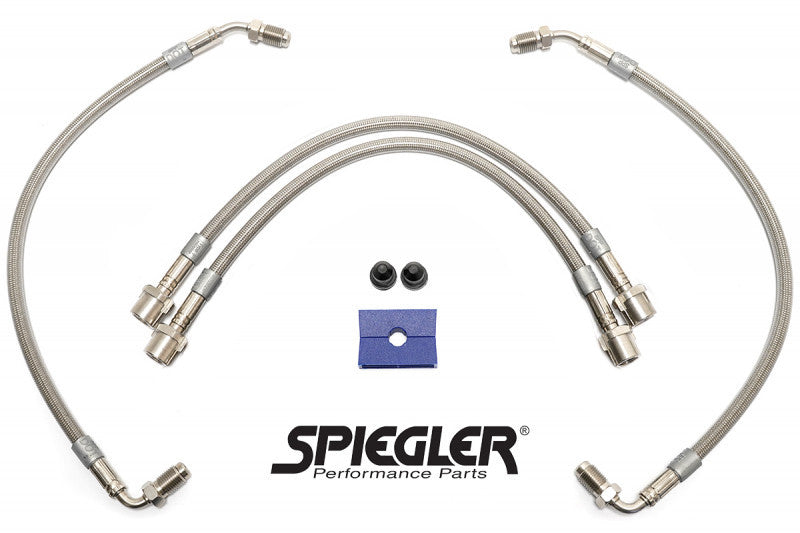
Spiegler Stainless Brake Lines - Porsche Front 4 Line Kit
$299.00
Spiegler Stainless Brake Lines - Porsche Front and Rear 4 Line Kit
Fitments include Most Porsche
Spiegler 100% stainless brake lines for various Porsche models. Front 4 Line Kit that replaces the OEM caliper hard line and increases line length for easier pad changes. Allows for caliper removal without opening hydraulic connection or removing the bracket attached to the spindle.
Features
All components manufactured in USA and Europe
Stress-free Torsion Fitting System.
Abrasion resistant coating/sheath
Aircraft quality stainless steel fittings and bolts.
Heavy gauge, tightly woven stainless steel braid
Stringent and consistent quality control
Du Pont PTFE- Teflon® lining
DOT compliant
Wide range of colors
Full testing battery on all parts, with lifetime warranty
Benefits
Allows 360 degree rotation of banjo fitting for correct alignment and strain reduction
Eliminates snagging and chafing
Superior strength, longevity, and safety
Eliminates line swell, more consistent feel
Reduces line expansion and provides greater durability
Quality assurance, road legal
Allows for personalization
Purchase and drive with confidence

Carbotech Performance Brakes
Carbotech CT1417 Brake Pads
from $253.00
Carbotech CT1417 Brake Pads
Carbotech CT1417 Brake Pad Fitment Guide
Make
Model
Build (Year)
Front
Rear
Porsche
991 3.4 Carrera [ceramic brake caliper with RBD cast iron disk ]
11 -
X
Porsche
991 3.4 Carrera [ceramic brakes]
11 - 15
X
Porsche
991 3.8 Carrera S [ceramic brake caliper with RBD cast iron disk]
11 -
X
Porsche
991 3.8 Carrera S [ceramic brakes]
11 - 15
X
Porsche
991 3.8 Carrera S / GTS [iron brakes]
11 - 15
X
Porsche
991.2 3.0 Carrera [ceramic brakes]
15 -
X
Porsche
991.2 3.0 Carrera S [ceramic brakes]
15 -
X
Porsche
991.2 3.0 Carrera S [iron brakes]
15 -
X
Porsche
991.2 3.0 Carrera GTS [iron brakes]
17 -
X
Porsche
992 3.0 Carrera [iron brakes]
18-
X
Porsche
992 3.0 Carrera S [iron brakes]
18-
X
Porsche
992 3.0 Carrera 4S [iron brakes]
18-
X
Porsche
Panamera [cast iron & ceramic brakes]
09 - 16
X
Available Carbotech Compounds
1521 — High-performance street compound with low dust, low noise, and excellent release and modulation.
AX6 — Autocross-focused compound with strong low-temperature bite and progressive control.
XP8 — Entry racing and track-day compound with strong fade resistance and rotor-friendly behavior.
XP10 — Higher-torque race compound with strong initial bite and excellent fade resistance.
XP12 — More aggressive race compound with added bite and high-temperature capability.
RP2 — Endurance racing compound designed for sustained performance and strong fade resistance.
XP20 — Very aggressive racing compound with high torque and extreme heat capability.
XP24 — Top-tier Carbotech race compound engineered for maximum torque and endurance-level demands.
How to Choose the Right Compound
1521 is the street-focused option. AX6 is intended for autocross. XP8, XP10, XP12, XP20, and XP24 are race-oriented compounds with increasing heat and torque capability. RP2 is designed for endurance racing. Track and racing compounds are not intended for normal street use.
Carbotech CT1417 Brake Pads FAQs
How do I know if CT1417 fits my vehicle?Review the Vehicle Fitment section above and compare the make, model, year range, and notes such as caliper, rotor, or trim details to your vehicle.
Which Carbotech compound is best for street driving?The 1521 compound is Carbotech's street-focused option. The other compounds in this listing are intended for autocross, track, or race applications.
Do I need to bed in Carbotech brake pads?Yes. Proper bedding is important for pad transfer, performance, and wear. Follow Carbotech's recommended bedding procedure for the chosen compound.
Choose the Carbotech CT1417 compound that matches your vehicle and driving demands, then confirm fitment carefully before checkout.
Spiegler Performance Parts
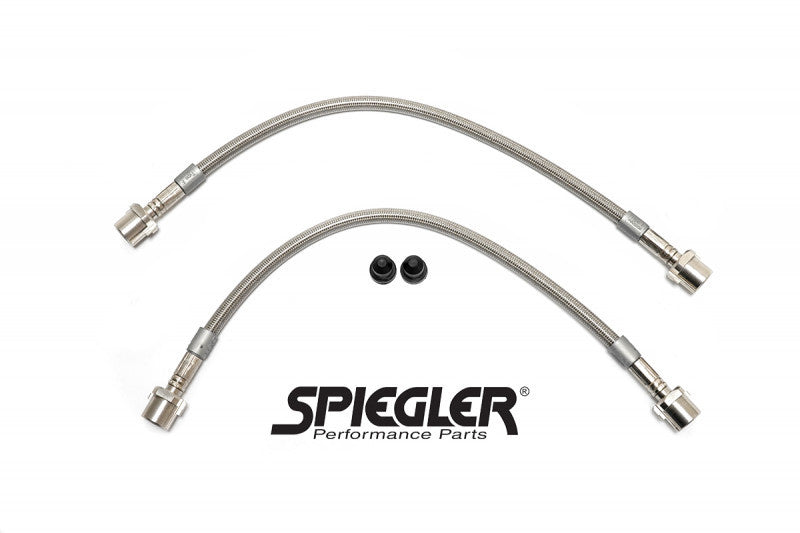
Spiegler Stainless Brake Lines - Porsche Rear 2 Line Kit
$199.00
Spiegler Stainless Brake Lines - Porsche Rear 2 Line Kit
Fitments include Most Porsche Models
Spiegler 100% stainless front or rear brake lines for various Porsche models.
***DOES NOT REMOVE/REPLACE REAR CALIPER HARD LINE***
These line kits were revised to retain the rear hard line on these applications. On the rear calipers, the hard line bracket is bolted to the caliper and therefore does not need to be disconnected in order to remove the caliper for a brake pad change.
Features
All components manufactured in USA and Europe
Stress-free Torsion Fitting System.
Abrasion resistant coating/sheath
Aircraft quality stainless steel fittings and bolts.
Heavy gauge, tightly woven stainless steel braid
Stringent and consistent quality control
Du Pont PTFE- Teflon® lining
DOT compliant
Full testing battery on all parts, with lifetime warranty
Benefits
Allows 360 degree rotation of banjo fitting for correct alignment and strain reduction
Eliminates snagging and chafing
Superior strength, longevity, and safety
Eliminates line swell, more consistent feel
Reduces line expansion and provides greater durability
Quality assurance, road legal
Allows for personalization
Purchase and drive with confidence

GiroDisc Racing Brakes & Technologies
Girodisc Titanium Brake Pad Shields for Porsche 991, 992, GT4 (Front)
$115.00
Girodisc Titanium Brake Pad Shields
Fitment: Porsche 991, 992, GT4 (Front)
The problem of brake fluid boiling is caused by braking heat transferring from the rotors and pads directly into the fluid through the caliper pistons. When brake fluid boils, it releases air that is normally part of the molecular structure of the fluid. This air is compressible, of course, so brake pedal pressure compresses this air instead of pushing brake fluid and moving the caliper pistons. The brake pedal goes to the floor.
Production street cars tend to suffer from this on track days because they don't have the extensive cooling ducts and exotic brake materials found on race cars. Race-only brake calipers generally come with titanium caliper pistons for one reason: titanium has very low thermal conductivity, which means it's bad at transferring heat.
That's good if you're trying to keep your brake fluid from boiling. Here's a comparison of materials and their relative thermal conductivity ratings in Watts per meter-Kelvin (lower is better):
Titanium 6AL-4V = 6.7 W/mK
Steel = 52 W/mK
Aluminum = 130 W/mK
Most fixed calipers use aluminum pistons which are, unfortunately, excellent at transferring braking heat to your brake fluid. Our solution is to place Girodisc's thin titanium shims between each brake pad and the caliper pistons. This helps prevent braking heat from transferring into the pistons and, thus, into the fluid.
For cars that are going to see hard driving or multiple track days, these shims are affordable protection against losing your brake pedal at the worst possible time, making your track day very expensive.
Water-jet cut to exact size, so there's no cutting, grinding, or swearing involved.
Price is per axle (four shims)
Castrol
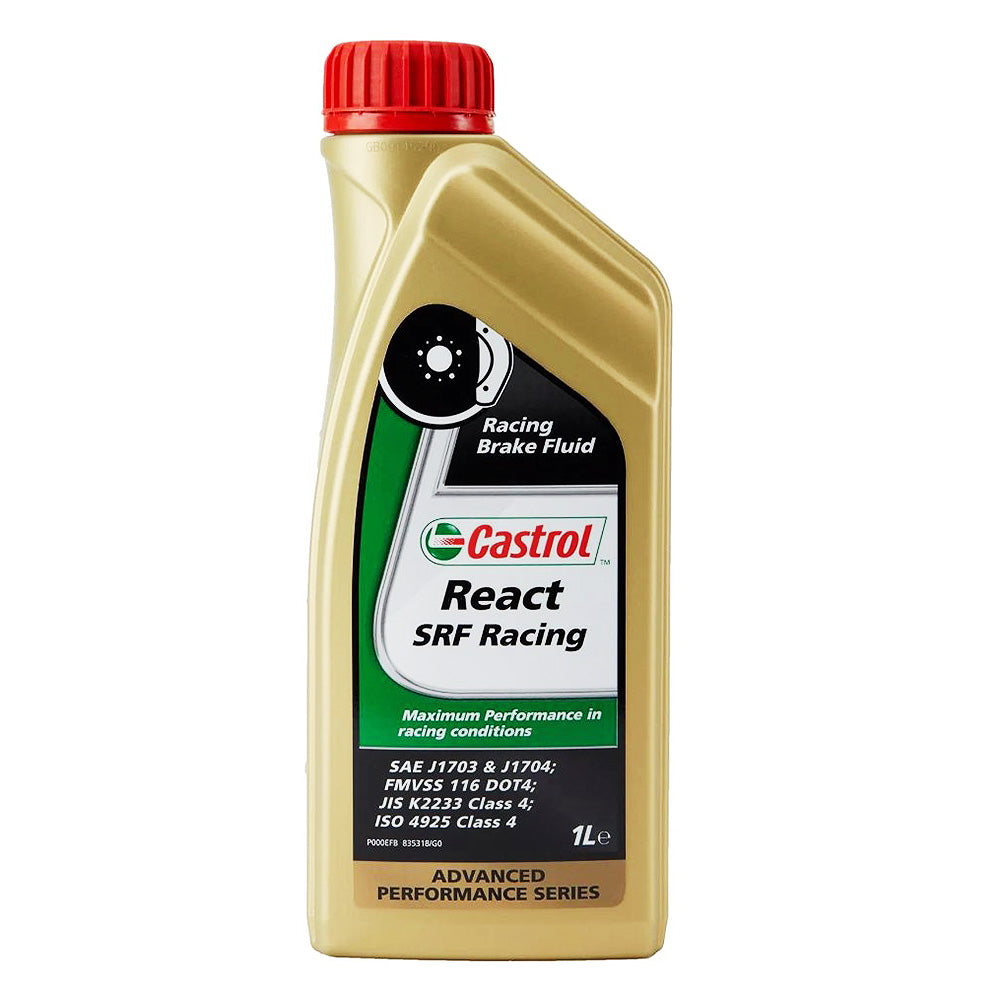
Castrol React SRF Synthetic Racing Brake Fluid (1000 ml)
from $99.95
Castrol React SRF Racing Brake Fluid
Ultra-High Wet Boiling Point Makes Castrol SRF A Standout
Castrol React SRF Racing Brake Fluid is an ultra-high performance brake fluid popular with many of the highest performing auto racing teams around the world. The key to Castrol SRF brake fluid's performance is its silicon-ester technology. Not only is it less hygroscopic (i.e., it absorbs less water) than typical glycol-based brake fluids, Castrol SRF also reacts chemically with any absorbed water to further reduce its adverse effects on high-temperature braking performance.
The result is an almost unheard of 518° F (270° C) wet boiling point, more than 100° F higher than most other racing brake fluids!
Exceeds SAE 1703, ISO 4925, JIS K2233, FMVSS No. 116 DOT3 and DOT 4 specifications.
Note: Castrol SRF is not a silicone-based brake fluid (i.e., DOT 5) and is compatible with most factory brake systems and fluids, including DOT 3 and DOT 4 fluids. Always follow vehicle manufacturer's recommendations when adding brake fluid.
Castrol React SRF Racing Brake Fluid Typical Properties:
Dry Boiling Point: 590°F (310°C)
Wet Boiling Point: 518°F (270°C)
Superior anti-vapor lock properties
One-liter (1000ml) bottle